6 non-electronic appeals of magnetic tiles : Why they can better inspire focus and a sense of rhythm

In today’s world, increasingly pervasive with electronic devices, parents are recognizing the importance of “low-stimulation, high-focus” play experiences for children’s development. Among numerous toys, magnetic tiles stand out with their unique non-electronic appeal, becoming a sought-after construction tool for children by parents and educators alike. They require no screen or power source, yet allow children to repeatedly experiment and immerse themselves for extended periods, experiencing the complete cycle of building, failing, adjusting, and rebuilding. Unlike fast-paced electronic products, magnetic tiles , with their transparent colors, magnetic adhesion, varied shapes, and controllable operation, provide children with a purer, more stable, and rhythmic learning experience.
A child’s focus and sense of rhythm don’t appear out of thin air; they gradually develop through repetitive actions, predictable feedback, moderate challenges, and a stable emotional environment. Magnetic tiles , with their non-electronic properties, perfectly meet all these needs, allowing children to construct their own learning flow within a natural rhythm. This article will systematically analyze the six non-electronic appeals of magnetic tiles to explore why they are considered one of the most effective toys for stimulating deep focus and a sense of rhythm in children today, while also revealing the psychological, perceptual development, and educational values behind them.
Pure and consistent physical feedback: a rhythmic experience unique to electronic toys
Electronic products often provide children with fleeting feedback, attracting their attention through flashing lights, sounds, animations, and reward mechanisms. This stimulation pattern frequently disrupts the natural rhythm of a child’s development. Magnetic tiles offer a completely different feedback method, allowing children to establish a direct causal relationship between actions and results, thus forming a natural rhythm.
When a child brings two magnetic tiles close together, the “click” sound from the magnetic attraction isn’t a reinforcing stimulus, but rather a quiet, rhythmic, and highly controllable feedback. The child can experience the magnetic attraction, the strength of the pull, structural changes, and stability through hand movements, and these experiences cycle continuously, maintaining a steady rhythm during the building process. The magnetic tiles don’t jump out of animation or emit abrupt sound effects; they simply respond to the child’s every movement in a physical way.
This stable and predictable physical feedback is one of the keys to developing children’s concentration. When children can control their environment and see the results of their actions, they are more likely to enter the “flow state” in psychology. Flow is not passive immersion, but active engagement, finding one’s own rhythm in a continuous cycle of operation and feedback. Magnetic tiles are a material that can support repetitive actions over a long period of time. They do not interfere with children’s attention due to overstimulation, nor do they cause information overload. Instead, they allow children to gradually find their own rhythm of play through building, adjusting, and retrying.
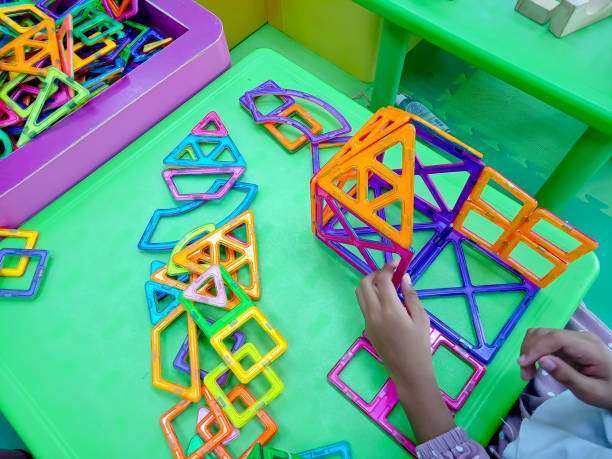
Transparency and color variations create an immersive experience: a natural guide to visual rhythm.
magnetic tiles lies in the combination of their translucent material and vibrant colors. Unlike the dynamic light of electronic screens, magnetic tiles rely on changes in natural and ambient light to present children with a slow, gentle, and natural visual rhythm. Children can observe the layering of colors, changes in transparency, and differences in shadow shapes amidst the changing light and shadow. These visual experiences not only avoid overstimulation but also stimulate in-depth observation and visual exploration.
When sunlight shines through magnetic tiles and casts colorful shadows, children often adjust their posture as the light and shadow shift, and may even start experimenting with letting the light pass through the tiles at different angles to create new colors and patterns. This interplay of light and shadow creates a quiet visual rhythm that is varied yet not overly stimulating, allowing children to explore visually in a peaceful manner.
Unlike the high contrast, rapid flashing, and high brightness of electronic screens, the light and shadow rhythm of magnetic tiles is closer to the natural rhythm. It allows children’s brains to maintain a stable amplitude during visual reception, avoiding visual fatigue, while also providing more inspiration for creative construction.
Therefore, magnetic tiles are not only a construction tool, but also a creative medium for visual rhythm. When children play with them, they do not experience intense stimulation, but rather a rhythm of light and shadow in the natural world. This sense of visual rhythm will unconsciously improve their patience, observation skills, and visual organization abilities.
The combination of repetitive movements and fine motor control: the mechanism for generating deep focus.
The development of concentration relies on repetitive actions and fine-tuning. Magnetic tiles offer a play experience that can be repeated infinitely, yet requires highly precise movements. When placing each magnetic tile , children need to control the angle, force, speed, and direction. These actions may seem the same each time, but they are actually full of variations.
magnetic tiles are manipulated encourage children to continuously adjust their strength, gradually strengthening their hand-eye coordination through constant fine-tuning. This is a motor experience that requires focus, patience, and meticulous operation, forming the foundation for children’s development of fine motor skills and deep concentration.
Furthermore, building magnetic tiles is challenging. As the structure grows taller or wider, the changes in stability and force distribution encourage children to experiment, observe, and modify. During this process, they enter a self-driven state of focus, not driven by external rewards, but by their desire to make the structure successful.
This intrinsic motivation of “focusing to achieve a goal” is often considered a key indicator of children’s self-regulation development and the most effective way to learn concentration. Magnetic tiles allow children to actively enter a state of deep engagement without electronic stimulation, thereby cultivating the foundational ability for long-term focus.

An environment free from distractions and temptations: the pure focus fostered by non-electronic toys
Electronic toys and devices often contain numerous stimulating elements, including sounds, lights, challenges, and social rewards. These elements can distract children and make it difficult for them to maintain long-term engagement in a single task. In contrast, magnetic tiles create a purer, quieter, and more sustainable environment for focused attention.
When building magnetic tiles , children’s attention is naturally focused on the stability of the structure, the changes in shape, the overlapping of colors, and the magnetic attraction, rather than being drawn away by other distractions. They are not interrupted by sudden pop-up ads, game rewards, or task prompts, nor are they reminded to switch tasks.
This kind of play experience, free from excessive stimulation, is crucial for training children’s sustained attention. Research shows that children are more likely to develop deep focus in a quiet, moderately changing, and controlled environment, and non-electronic toys are the best medium for this type of environment.
Magnetic tiles not only won’t interrupt a child’s train of thought, but they will also allow them to feel a sense of progress and control with each placement and adjustment. This sense of control will continuously enhance a child’s focus and make them more willing to invest more time in the building experience.
Autonomous rhythm and constructive cycle: the most precious “slow learning” experience outside of video games
Modern children’s lives are often driven too fast by external forces. Intensive classes, numerous tasks, and frequent feedback from electronic devices cause their attention to constantly jump between high-frequency stimuli. Magnetic tiles offer a completely different learning rhythm, allowing children to build, observe, adjust, and complete at their own pace, thus experiencing a precious slow learning process.
In slow learning, children don’t strive for quick completion but focus more on the process itself. They might spend ten minutes aligning an angle or half an hour experimenting with how light and shadow can create ideal color variations. Without countdowns or task limitations, they can explore materials at their own pace, allowing their concentration to grow naturally.
This self-directed rhythm not only makes children’s behavior more relaxed, but also makes it easier for them to experience a sense of “immersion” without pressure. Once children enter this self-directed rhythm, their concentration will automatically extend, even far exceeding adults’ expectations. Many parents have been surprised to find that their children, who were previously easily distracted, can play with magnetic tiles for more than an hour at a time.
This phenomenon is not accidental, but rather because a non-electronic environment preserves space for children to think, allowing them to find their pace of growth within a natural rhythm. The construction experience of magnetic tiles not only inspires imagination but also strengthens patience and perseverance, steadily supporting the development of children’s concentration in a slow-paced environment.
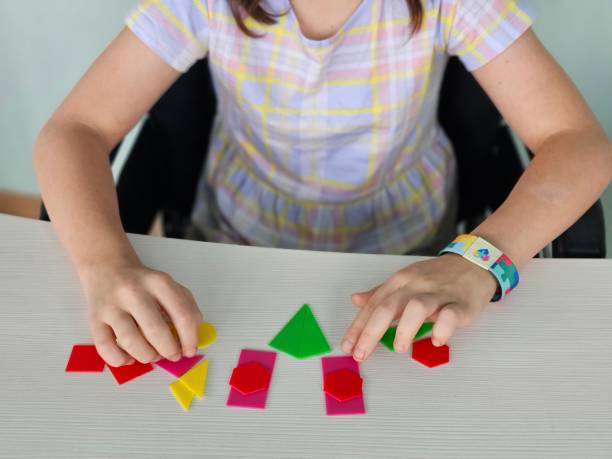
Building a sense of psychological security: Non-electronic interaction encourages children to try and fail, and to persevere.
magnetic tiles brings a deeper value: the establishment of a sense of psychological security. Error messages, failure sounds, or sudden negative feedback from electronic devices often stress children and make them afraid to try new things. In contrast, failures with magnetic tiles are quiet, gentle, and non-judgmental.
When the structure collapses, there are no loud noises or images of failure. Children only hear the soft thud of the structure falling, and then naturally begin the process of observing and rebuilding. This gentle environment of failure prevents children from becoming anxious about making mistakes, and instead cultivates a resilient spirit of “if it falls, rebuild it again.”
The effects of psychological security extend far beyond what is immediately apparent. Magnetic tiles not only enhance children’s patience in the face of failure but also make them more willing to persevere through prolonged repetition. In an environment where children are not blamed, rushed, or interrupted, they are better able to experience sustained focus and gradually build confidence in problem-solving within a rhythmic framework.
Magnetic tiles provide children with a non-electronic, stress-free experimental space, allowing them to find their own construction rhythm through trial and error. This experience is of profound significance for cultivating resilience, perseverance, and intrinsic motivation.
Conclusion
In an era dominated by electronic products, magnetic tiles , with their pure, non-electronic power, create a quiet space exclusively for children. They not only help children concentrate better but also allow them to experience rhythm through repetition, exploration, and changes in light and shadow. Six non-electronic charms combine to create a stable, gentle, and inspiring learning environment, enabling children to truly immerse themselves and experience the power of creativity, focus, and perseverance.
Magnetic tiles are not just simple toys, but a growth tool that supports children’s rhythm, guides deep focus, and strengthens intrinsic motivation. In their world, there is no coercion, no noise, no anxiety, only the child’s own rhythm and play of light and shadow. It is this sense of rhythm that empowers them through play, making them more confident in life and better equipped to face future learning challenges.