Magnetic Tiles: A 3-Step Guide to Design Thinking: The Power of Prototype Testing and Rapid Improvement

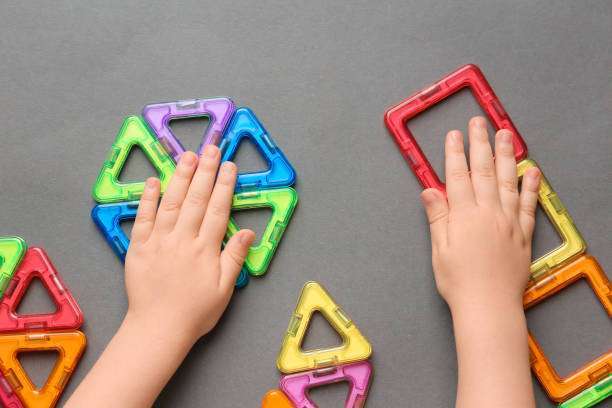
Among all early childhood education toys, magnetic tiles are one of the most popular materials among parents and educators due to their transparent colors, lightweight structure, and free combination capabilities. Compared to simple building blocks, they are more like an open design platform, allowing children to learn true creativity through a continuous cycle of building, experimenting, disassembling, and rebuilding.
In this process, the three core steps of design thinking—prototyping, testing, and rapid improvement—are integrated into the child’s play experience in a remarkably natural way. Compared to textbook-based knowledge input, this experiential learning enables children to actively think about problems, observe variables, identify logic, discover errors, and try adjustments, thus developing early engineering thinking, product thinking, and innovative awareness through repeated trials.
As educational philosophies continue to evolve, more and more families are realizing that true learning is not about accumulating knowledge, but about the continuous exploration of problems. “How do children learn to express their ideas?” “How do children develop their own solutions?” “How do children learn to piece together clues from failures and find new approaches?”
These abilities are more important than simply completing a task, and they are also better predictors of a child’s future performance in creative careers. Magnetic tiles provide a near-perfect medium, allowing the three-step model of design thinking to be concretely presented in the child’s construction process.
This article uses magnetic tiles as the core material, demonstrating through concrete examples, behavioral observations, and developmental pattern analysis how children can naturally master the three most crucial steps of design thinking during everyday play:
prototyping, testing and verification, and rapid improvement. Whether you are a parent, teacher, or a researcher of child development, you can find valuable strategies here and further understand why magnetic tiles are not just a toy but also a mini innovation laboratory. We will begin with the first step—prototyping—and gradually unfold the unique way design thinking is presented in children’s construction process.
Part 1: Prototyping: Turning Abstract Ideas into Tangible Structures
In the first step of design thinking, the most important thing is not the right answer, but “making” the idea. For adults, a prototype is the initial form of product development, which may be a sketch on paper or a rough model. For children, magnetic tiles are their paper, building blocks, toolbox, and canvas, and they can start building an idea at any time.
When children pick up magnetic tiles , they often don’t plan ahead; they simply begin with the first action of “putting them together.” This is the essence of prototyping: creating an observable, tangible, and adjustable preliminary form.
Magnetic tiles , with their lightweight, magnetic structure, stimulate children to act quickly. They don’t need to consider the stability of the structure, the accuracy of the angles, or draw a diagram beforehand. The moment they start putting them together and are attracted by the magnets is the instant the prototype is born.
magnetic tiles also subtly enhances “prototype observation.” Children can see how the tiles connect, the new effects created by layering colors, and the internal structure, making them more willing to observe their magnetic tile creations from different angles.
Observation itself is the first step in design thinking, and magnetic tiles make observation a natural behavior. This transparency also motivates children to continuously adjust the shape because they can clearly see what they are changing and what it will affect.
Furthermore, prototyping helps children learn to extract “core ideas.” For example, “I want to build a tower,” “I want to build a car,” “I want to build a castle entrance,” “I want to make something that rotates.” These initial ideas are often vague and highly conceptual, but once children begin building, they gradually transform into concrete structures. This process involves not only hand movements but also brain activity. As children place each magnetic tile , they are determining the overall shape; this “thinking as you do” approach encourages them to actively explore.
Prototyping has another key benefit: reducing the cost of failure. For children, an unstable structure or a collapsed wall can be reassembled in just two seconds, eliminating feelings of frustration. Magnetic tiles are precisely this low-cost trial-and-error material, encouraging children to start quickly, adjust as needed, and not worry about making mistakes. This experience subtly fosters a “get it done first” mindset in children, rather than endlessly hesitating in their minds.
Therefore, guided by magnetic tiles , prototyping becomes a natural activity for children. They build initial models through rapid construction, transforming abstract ideas into observable and adjustable visual structures. In this process, children learn to actively express their ideas, try solutions, and lay a solid foundation for the subsequent testing phase.
Part Two: Testing and Verification: Identifying Problems and Potential Issues Through Observation of Structural Performance
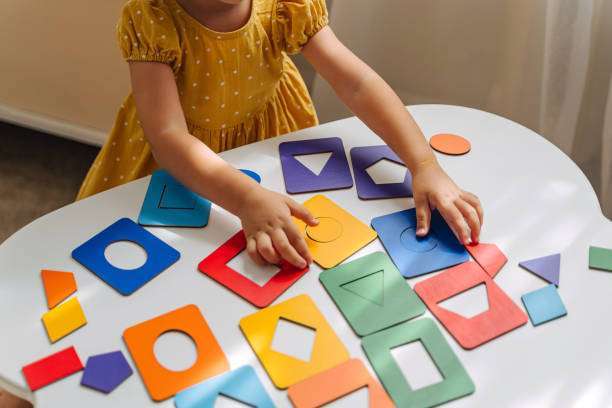
After the prototype is completed, the second step in design thinking is testing, which is to check whether the structure meets expectations. In the game of magnetic tiles , testing is often presented in two directions: functional testing and structural testing. Functional testing is about what the child wants the creation to “perform a certain function”; structural testing is about observing whether the creation is stable, aesthetically pleasing, or able to support the next step of construction.
For example, when children build a bridge, they observe whether it can support a toy car; when they build a tower, they observe whether it will collapse; when they build a roof, they observe whether it forms a complete enclosed space. These observations are not only intuitive but also a process of “testing hypotheses” in design thinking.
They initially thought that a certain arrangement would be stable, but in reality, it might not; they thought a certain angle could bear weight, but in reality, it might collapse instantly; they thought a certain combination could rotate, but in reality, it gets stuck. These experiences help children understand the real relationship between cause and effect.
magnetic tiles make the testing process more experiential because the magnetic connection has a certain degree of elasticity, exhibiting varying stability as the angle changes. Children can clearly observe the structure’s response during testing.
For example, if the tower begins to sway after reaching a certain height, children will discover that the swaying originates from an insufficient base area; or they will find that a tilted magnetic tile causes problems for the entire structure, thus understanding the relationship between angle and force direction. All of these are core expressions of engineering thinking, and magnetic tiles make them concrete and observable.
In addition, the test teaches children to evaluate aesthetics. The color variations and light refraction of magnetic tiles draw children’s attention to symmetry and balance. They automatically observe whether the colors complement each other, whether the structure looks good, and whether the proportions of the artwork are harmonious.
These visual experiences are also part of the test because design thinking not only focuses on the effectiveness of the structure but also on the aesthetics and logic of the magnetic tile artwork.
During testing, children will also begin to compare different variables. For example, they will observe changes in stability when the structural height is changed; they will discover differences in spatial size when the geometry is changed; and they will observe differences in adhesive strength when the splicing method is changed.
These comparative behaviors allow children to form early hypotheses—perhaps it would be better if I did it another way. This sensitivity to the possibility of change is an important source of creativity, and the multi-shape, multi-angle, and multi-color characteristics of magnetic tiles provide enough variables for children to experiment with.
Therefore, the testing phase is not only about observing structural performance, but also about stimulating children to think about “why this is happening.” When a creation collapses, they look for the reasons; when a structure is stable, they look for the underlying principles; when a function is implemented, they identify the factors that led to its success. This result-based reflection is the core competency of design thinking and provides direction for rapid improvement in the next step.
Part Three: Rapid Improvement: Learning from Mistakes and Building the Ability for Continuous Optimization
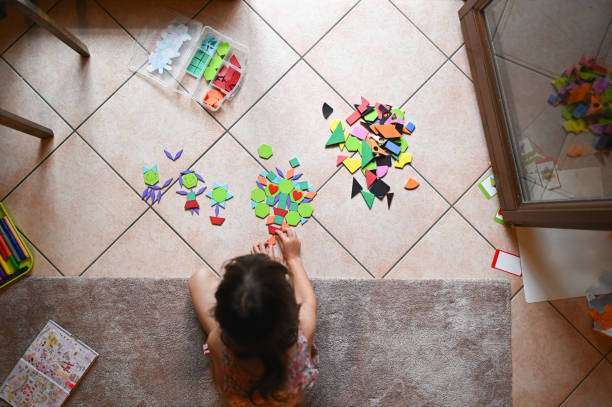
In the third step of design thinking, rapid improvement is the stage that best embodies innovation. In the game of magnetic tiles , this process happens almost naturally. Children don’t need to be instructed to modify or asked to rethink; whenever a problem arises in the structure, an inadequacy appears, or a new idea emerges, they will proactively enter the improvement process.
The key to rapid improvement lies in the speed of “immediate adjustment.” Because magnetic tiles don’t require complete dismantling and rebuilding, they can be partially disassembled, reinforced in certain areas, or even completely overhauled and rebuilt. This low-resistance approach to modification makes children very willing to try different versions.
For example, when a tower collapses, children will immediately widen the base; when a bridge’s load-bearing capacity is insufficient, they will add side supports; when a roof structure is unstable, they will replace it with a triangle. This behavior of identifying problems through testing and making immediate adjustments embodies the core spirit of rapid iteration.
Rapid improvement also strengthens children’s systems thinking because they begin to realize that structural changes can have holistic effects. For example, widening the base not only makes the tower more stable but also changes the proportions of the artwork; changing the way tiles are joined not only affects the strength of the joints but also alters the color presentation; adding new magnetic tiles not only strengthens the structure but may also inspire new functions.
For instance, while reinforcing the car’s structure, a child might suddenly think, “I can make a window here,” “I can make a spoiler,” or even “I can turn it into a truck instead of a regular car.” This ability to expand from a single point to the whole is a crucial creative behavior in design thinking.
Rapid improvement also helps children gradually develop a “solution optimization mindset.” After multiple adjustments, children will discover which method is the most stable, which puzzle uses the fewest pieces, and which shape is the most secure. These experiences are accumulated through hands-on practice, rather than being taught, making them more memorable and transferable. In future building tasks, they will naturally apply these methods, transforming experience into a way of thinking.
In this cycle of rapid improvement, children gradually develop a positive attitude towards problems. They begin to look forward to better versions rather than avoiding mistakes; they actively seek new ways to try new things rather than sticking to a particular spelling; they are happy to adjust their designs rather than fearing structural imperfections. This positive experience, through long-term nurturing, transforms into genuine innovative personality traits: a willingness to try, a willingness to adjust, and a commitment to continuous improvement.
Therefore, in the design thinking enlightenment of magnetic tiles , rapid improvement is not only a structural adjustment, but also a key part of cognitive growth. Through repeated modification and experimentation, children develop a habit of proactive exploration and positive adjustment, providing psychological and mental preparation for facing complex problems in future learning.
Conclusion
Throughout the three-step design thinking process, magnetic tiles provide a free, low-cost, and infinitely possible creative environment. Children learn the courage to prototype, the observational skills to test and verify, and the awareness of continuous optimization through rapid improvement. These abilities are more important than completing a beautiful piece, because they are the core foundation for children’s future ability to think independently, solve problems, and create new things.
Magnetic tiles empower children to become their own designers, making trial and error less daunting, adjustments more natural, and innovation a habit. As children understand logic through assembling structures, discover problems through testing, and build better versions through improvement, they are not merely playing with a toy, but constructing their own way of thinking. The enlightenment of design thinking will accompany them on a deeper learning journey, and magnetic tiles are the most beautiful, friendly, and liberating starting point on this journey.