5 highly effective ways to build family teams using magnetic tiles : Trust and communication are rebuilt.

I. The compatibility between family team building and magnetic tiles
In modern family education, team building activities are no longer limited to outdoor games or team sports; collaboration and communication within the family also need practice and reinforcement. Magnetic tiles, as an educational toy that can be assembled and reassembled, provide a unique medium for family team building.
They not only offer intuitive color and tactile feedback, but also stimulate members’ cooperative awareness and communication skills through the construction, light and shadow effects, and creative combinations of magnetic tiles .
The core of family team building lies in enhancing trust and collaboration through completing tasks together, and magnetic tiles naturally offer multi-dimensional operational challenges: from basic geometric shapes to complex magnetic tiles , and then to color matching and lighting design, each step requires communication and coordination among members.
For children, this activity is both a creative game and an important platform for team training; for parents, it provides a window into observing their children’s thinking patterns, personality traits, and collaborative abilities.
The removable and magnetic properties of magnetic tiles prevent frustration from arising from mistakes or adjustments, allowing children to maintain a positive attitude through trial and error. Parents can also guide children in discussing solutions and adjusting strategies, subtly training their communication skills. In this context, family team building becomes more than just a formality; it’s about building genuine trust and effective communication through hands-on experience.
II. Gameplay 1: Cooperative Tower Challenge, Building Trust
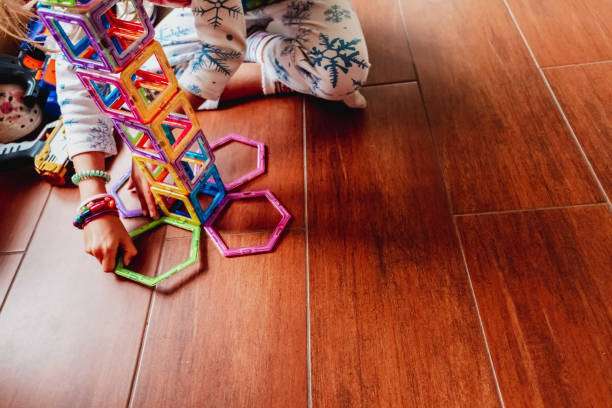
The Collaborative Tower Challenge is a direct form of teamwork activity for family team building. Participants work together to build a multi-story tower using magnetic tiles , with each person responsible for building different levels or functions. Throughout the process, members must trust each other, understand their responsibilities, and maintain a consistent pace.
Children, with the help of their parents, experience mutual trust as they build the magnetic tiles , while parents can adjust their guidance strategies by observing their children’s progress.
The challenge of this game lies in the stability of the high-rise tower, requiring coordination of actions and building sequence among team members. Neglecting any step will affect the overall magnetic tiles , so members must maintain synchronization through verbal communication and gestures. Through this collaborative tower-building challenge, family members not only experience success visually and tactilely, but also build mutual dependence and trust psychologically. Each successful completion of a tower strengthens the members’ teamwork and confidence, resulting in a significant family team-building effect.
In practice, parents can set appropriate challenges, such as increasing the height, adding arch bridge magnetic tiles , or combining different color layers, allowing children to experience cooperation and innovation in a safe and controlled environment. This activity not only improves hand-eye coordination but also strengthens communication and decision-making skills, providing a reference and model for daily family interactions.
III. Gameplay Option Two: Explore the Light and Shadow Maze and Enhance Communication Skills
Magnetic tile light and shadow maze exploration is another highly effective way to play. By adjusting the transparency and color combinations of magnetic tiles , family members can work together to build a small light and shadow maze and try to guide each other through the exploration task. Children observe the changes in light and shadow in the maze, while parents provide clues through verbal guidance or gestures. This play method naturally promotes verbal and non-verbal communication among family members.
This game mode places particular emphasis on communication strategies and the precision of information delivery. Members must provide effective guidance without directly interfering with each other’s actions, while maintaining patience and listening skills. Children need to understand hints, adjust their actions, and observe light and shadow feedback while exploring the maze, thus developing logical thinking and problem-solving abilities. Parents, in turn, adjust their communication methods by observing their children’s reactions, optimizing family interaction.
Exploring the light and shadow maze not only tests the teamwork of magnetic tiles but also helps family members build communication and trust in a fun way. When children successfully complete the magnetic tile maze task, their sense of accomplishment and trust are enhanced simultaneously, and family relationships are naturally improved in a relaxed and enjoyable environment. This type of play has a long-term positive impact on improving members’ listening skills, expression skills, and team strategy awareness.
IV. Activity Three: Creative Rainbow Bridge Construction to Enhance Emotional Regulation Skills
The creative bridge-building activity emphasizes innovation and emotional management using magnetic tiles . Team members collaboratively design and build a bridge using magnetic tiles . The bridge not only needs to be sturdy but can also showcase creativity through color combinations and shape designs. During the activity, children and parents may encounter situations where magnetic tiles collapse or become unstable; in these moments, emotional regulation and mutual support become crucial.
Through creative rainbow bridge building, children learn to analyze the reasons for failures, try to rebuild, and experience encouragement and support from their parents. Parents offer suggestions rather than directly instructing, allowing children to gain a sense of accomplishment and control through autonomy. This approach enhances psychological resilience, making it easier for children to remain calm when facing conflict or setbacks, while also further strengthening communication and trust among family members.
The challenge of the creative rainbow bridge game lies in the comprehensive application of magnetic tile design and color matching, requiring members to reach a consensus through cooperation. Through discussion and adjustments to the operational plan, family members unconsciously practice emotional regulation and strategic negotiation, providing simulated training for handling real-life conflicts. This game not only enhances children’s spatial thinking and creativity but also strengthens the psychological resilience within the family.
Fifth, Activity Four: Disassembling and Reconstructing Magnetic Tiles , Training Problem-Solving Skills
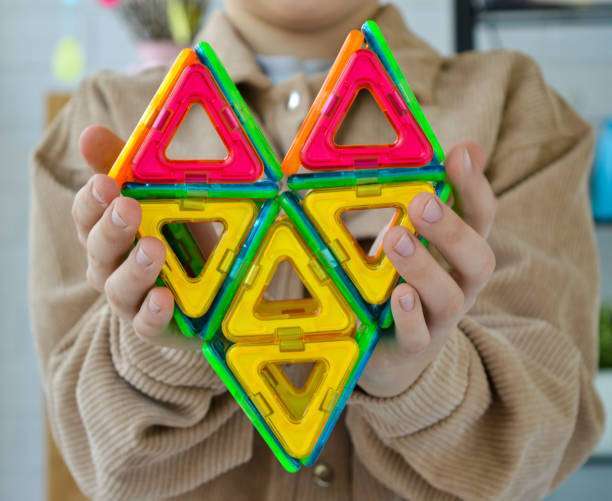
The magnetic tiles disassembly and reconstruction activity holds special significance in family team building. Members first work together to build a magnetic tiles set , then disassemble some or all of them within a set time , and redesign and rebuild. This activity tests the team’s analytical, decision-making, and problem-solving abilities, while also providing a safe platform for emotional release and conflict resolution.
During the disassembly and reconstruction process, members must discuss disassembly strategies, division of labor, and reconstruction plans. Children, guided by their parents, learn the principles and operation methods of magnetic tiles , while simultaneously developing patience and creativity. Parents can more effectively guide communication and collaboration by observing their children’s decision-making and operational habits. This disassembly and reconstruction game not only allows children to experience failure and improvement but also helps families build trust and a sense of responsibility, thereby enhancing emotional bonds among members through relaxed play.
Furthermore, deconstruction and reconstruction can be integrated with time management, such as setting time limits for each round of operations, allowing family members to complete tasks within a limited time. This not only trains problem-solving skills but also improves team efficiency and collaboration rhythm, providing transferable experience for daily family communication and cooperation.
Sixth, Activity Five: Free Creative Building to Stimulate Expression and Listening Skills
to freely build with magnetic tiles without pre-set rules . Children and parents can collaboratively come up with creative ideas, discuss color combinations, shape designs, and lighting effects, ultimately creating unique works of art. The core of this activity lies in expression and listening: children need to listen to their parents’ opinions while expressing their creativity, and parents need to listen to their children’s ideas while providing guidance.
Free-form creative building empowers members with autonomy and creative space, making communication more natural and meaningful. Children practice logical expression and language organization skills while explaining design concepts, while parents guide them to deepen their thinking through questioning and encouragement. Simultaneously, members continuously adjust their operational rhythm and strategies through collaboration, enhancing the family’s overall teamwork and trust. This approach not only increases fun but also maximizes the educational value of family team building.
In practice, free-form creative building can be combined with changes in light and shadow and color combinations, providing members with dual feedback, both visually and in terms of operation. Through repeated attempts and communication, family members complete complex building tasks in a relaxed atmosphere, naturally strengthening trust and communication, and enhancing family relationships.
VII. Analysis of Psychological and Educational Significance
magnetic tiles for family team building are not only entertaining activities, but also have profound psychological and educational significance. The collaborative tower challenge cultivates trust and a sense of responsibility; the light and shadow maze exploration enhances communication skills and logical thinking; the creative rainbow bridge construction strengthens emotional regulation and creativity; magnetic tiles disassembly and reconstruction trains problem-solving abilities; and free creative assembly stimulates expression and listening skills.
The combined effect of these five activities allows family members to continuously strengthen their psychological resilience, cooperative spirit, and communication skills through operation, observation, discussion, and adjustment.
Psychological research shows that children and parents experience positive cognitive and emotional feedback when completing tasks together and achieving visual accomplishments. The instant tactile and visual feedback mechanism of magnetic tiles allows members to quickly experience success during operation, enhancing trust and a sense of belonging. Simultaneously, the opportunities for failure and rebuilding within the task provide emotional regulation training, making family team-building activities not only fun but also helpful in cultivating long-term transferable social and emotional management skills.
VIII. Practical Operation Suggestions
magnetic tiles team-building activities at home , a complete operational process can be formed by combining five play methods. First, clearly define the activity goals, ensuring children and parents understand the meaning and challenge of the task. Second, design the division of labor based on the number and age of family members, ensuring everyone has a chance to participate. Third, set phased tasks and an operational rhythm to ensure the activity progresses in an orderly manner.
Fourth, guide children to express their creativity and engage in communication and discussion, making the process both educational and fun. Finally, through a cycle of disassembling, rebuilding, and freely assembling, children can experience challenges, failures, and successes in a safe environment, strengthening trust and communication skills within the family.
Through systematic operation and guidance, magnetic tiles family team building can achieve multi-dimensional improvement in psychological, cognitive and social abilities in a relaxed and fun way, providing a replicable practice model for family education.
IX. Conclusion
Magnetic tiles family team building is not only a creative building activity, but also an educational tool that promotes trust, communication, and collaboration. Through collaborative tower challenges, light and shadow maze exploration, creative rainbow bridge construction, and magnetic tiles… With five play methods—disassembly and reconstruction, and free creative assembly—family members naturally build trust, enhance communication skills, and improve problem-solving abilities through hands-on activities. Parents and teachers can integrate these activities into daily family education, allowing children to cultivate creativity, focus, and resilience through play, while simultaneously enhancing the overall quality of family interaction and happiness.
FAQ
Q1: Which families and children are suitable for magnetic tiles family team building?
It is suitable for children from preschool to primary school and their family members, especially for families who want to improve communication, trust, collaboration and creativity in a relaxed environment.
Q2: How to balance children’s autonomy and parental guidance in team building?
By clearly defining roles, setting phased tasks, engaging in creative discussions, and rotating roles, children can express their creativity through independent operation, while parents can provide support through observation and guidance without direct intervention.
Q3: How to handle assembly failures or conflicts during family team building activities?
By using disassembly and reconstruction, immediate feedback, and emotional guidance, failures and conflicts can be transformed into learning and collaboration opportunities. At the same time, strategies can be adjusted through discussion to strengthen trust and communication.