6 rhythmic techniques for practicing with magnetic tiles: quietly boosting focus and patience

I. The Core Role of Rhythm in Children’s Building
In early childhood education, cultivating focus and patience has always been a top concern for parents and teachers. Magnetic tiles, as a semi-transparent, connectable creative material, not only stimulate children’s interest but also improve their focus through building exercises. Guiding rhythm during the building process is particularly crucial, as it helps children develop a stable thought process, reduces frustration, and gradually extends their attention span.
Rhythm isn’t just a concept from music or dance; in building, it manifests as a sense of timing, fluidity of hand movements, and continuity of thought. When children build magnetic tiles according to a certain rhythm , their brains form a coordinated feedback loop between vision, touch, and motor control.
Through this loop, children’s concentration is naturally maximized, and their patience is subtly enhanced through continuous manipulation and adjustment. This training method is more effective than traditional static games in developing children’s concentration and provides a cognitive foundation for performing complex tasks.
magnetic tiles make rhythm training easier to achieve. Children can smoothly connect and disassemble tiles during the building process without worrying about frustration from overly difficult tasks. This immediate feedback and small successes enhance children’s enthusiasm, encouraging them to continue engaging in building activities, thereby subtly improving their patience and sense of rhythm.
II. Mastering the natural rhythm of hand-eye coordination
Building magnetic tiles is an activity that highly relies on hand-eye coordination. Children need to visually judge the direction, shape, and color of the magnetic tiles , and then use hand movements to accurately connect different pieces. Good hand-eye coordination not only helps in successful building but also provides conditions for developing concentration. Rhythm plays a bridging role here; by reasonably controlling the speed of operation and the rhythm of repetitive movements, children can more steadily complete complex structures.
In practical observations, children ‘s accuracy in assembling magnetic tiles is significantly higher when they connect them according to a fixed rhythm than when doing it randomly. For example, when building a three-story tower, if a child first observes the target structure and then operates in a cyclical rhythm of “observe—grab—connect—correct,” each magnetic tile is assembled more steadily, increasing the success rate while also enhancing attention and patience. Teachers and parents can demonstrate and guide children to establish this rhythm initially, and then allow children to independently master changes in the rhythm, thereby developing self-regulation skills.
Developing a sense of rhythm not only affects hand-eye coordination but also directly promotes children’s spatial cognitive abilities. Through repetitive operations and a stable rhythm, children build an internal model of three-dimensional structures in their brains, understanding structural stability and spatial arrangement patterns. This cognitive ability has a long-term impact on subsequent learning of mathematics, geometry, physics, mechanics, and even artistic creation.
III. The psychological rhythm of synchronized breathing and movement
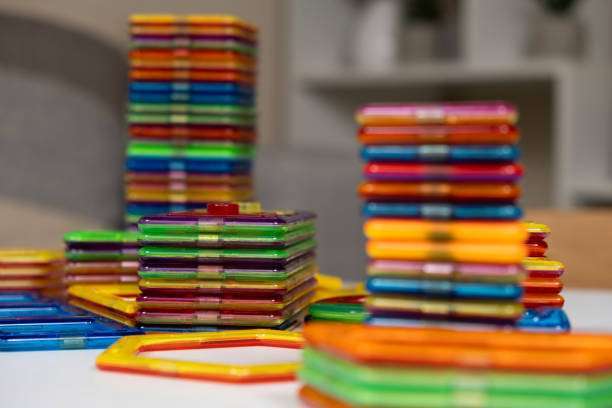
magnetic tile building exercises, a child’s mental rhythm is equally important. Mental rhythm refers to the coordination between a child’s thoughts, emotions, and actions during the activity. A stable mental rhythm helps children analyze the structure of the tile more calmly and adjust failed attempts more patiently, rather than hastily dismantling and starting over.
Synchronizing breathing with movement is a key means of establishing mental rhythm. When children pause briefly before each action, take a deep breath, and then slowly perform the action, their brains form a continuous cycle of “planning-execution-feedback,” thus extending their concentration.
This skill is especially important when building complex structures. For example, children often feel frustrated when building multi-tiered arch bridges or towers with magnetic tiles due to instability. Through mental rhythm training, children learn to observe the structure and predict the stability of the next step before proceeding. Teachers can guide children by verbally reminding them or using gestures to synchronize their breathing with their movements, such as “observe first, then grasp, then connect,” helping them establish a mental rhythm. This training not only improves the success rate but also allows children to experience a sense of accomplishment and build patience during the building process.
IV. Segmented Tasks and Micro-Circulation Rhythm
magnetic tile building exercises, segmented tasks and micro-cycle rhythms are effective ways to improve concentration. Completing complex structures in one go can easily lead to distraction and frustration. Breaking tasks down into smaller steps, with each step forming a micro-cycle rhythm, allows children to complete small goals in a short time and receive continuous positive feedback during the process.
For example, when building a six-story tower, the task can be divided into stages such as “bottom layer construction—second layer assembly—third layer stability test—fourth layer assembly.” Each stage forms a micro-cycle rhythm, giving children a significant sense of accomplishment upon completion of each stage. This micro-cycle rhythm not only helps children break down complex tasks but also trains their patience and ability to progress step by step. Parents and teachers can use verbal cues or timers to help children maintain a stable pace at each stage, thus naturally extending their focus.
This micro-circulation rhythm can also improve children’s self-monitoring abilities. By continuously completing small goals, children learn to observe whether their actions align with the plan and whether adjustments to their strategies are necessary. This self-monitoring ability has a positive impact on subsequent learning habits, time management skills, and problem-solving abilities.
V. Sensory Rhythms Synchronized with Vision and Touch
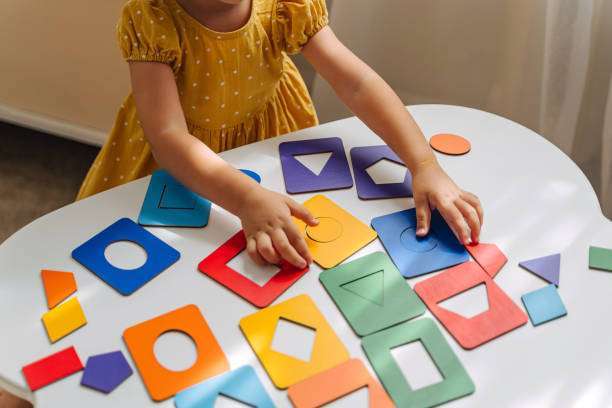
Magnetic tile building is not only a training of hand movements, but also a coordinated activity of vision and touch. Children need to observe the shape, color, and direction of the magnetic tiles visually , and then judge the strength and stability of the tiles through touch. The synchronization of vision and touch creates a sensory rhythm, which allows children to perceive the material properties and structural changes more acutely during the process.
Experiments showed that when children consciously focused their visual attention on the shape and position of magnetic tiles , while simultaneously adjusting the pressure and angle through tactile feedback, the stability of the assembled structures significantly improved.
Sensory rhythm training allows children to operate more precisely, reducing failures caused by excessive force or inaccurate direction, thereby enhancing patience and concentration. This sensory rhythm is not only applicable to building activities but also lays the foundation for other fine motor activities such as drawing, crafts, and playing musical instruments.
magnetic tiles during play , creating a stable, synchronized rhythm between vision and touch. This rhythm allows children to maintain focus while engaging in hands-on activities, experiencing a sense of control and accomplishment, thus subtly extending their patience.
VI. The Rhythm of Reflection and Self-Regulation
Building with magnetic tiles is not only a training ground for manipulative skills, but also an important tool for cultivating thinking rhythm and self-regulation abilities. Reflective rhythm refers to the process by which children stop to observe, evaluate, and adjust after each activity. This rhythm helps children establish a self-feedback cycle, leading to greater accuracy and organization in the next step.
For example, after children complete a section of a tower, teachers can guide them to stop, observe the tower’s stability, color combination, and lighting effects, and think about how to improve it next. This reflective rhythm helps children learn self-assessment, enhancing their patience and planning skills.
At the same time, it cultivates a calm and composed mindset in children when they fail. As the reflective rhythm becomes internalized, children’s actions during building become more organized, and they gradually develop self-learning and self-control abilities.
This kind of rhythm training is crucial for improving children’s overall abilities. It not only improves operational precision and structural stability, but also cultivates focus, patience, and creative thinking at the cognitive, emotional, and psychological levels, providing a solid foundation for children to face complex tasks in learning and life.

VII. Comprehensive Application and Practical Suggestions
magnetic tiles provide a complete system for cultivating children’s focus and patience, encompassing hand-eye coordination, psychological rhythm, microcirculation rhythm, sensory synchronization, and reflective regulation. In practice, parents and teachers can apply them as follows:
First, before assembling, help children establish a basic rhythm, such as an operation cycle of observation—grasping—assembling—correction, so that children are familiar with the operation process. Second, break down complex structures into small goals through segmented tasks and micro-cycle rhythms, allowing children to experience continuous sense of accomplishment in a short period of time. Third, guide children to synchronize their breathing and movements during operation, forming a mental rhythm and improving their calmness and patience. Fourth, through synchronized visual and tactile sensory training, children’s operation becomes more precise and stable.
Fifth, after completing the assembly, guide children to reflect and self-regulate, summarize their experience, and prepare for the next round of operation. Finally, as children’s proficiency improves, they can gradually be allowed to independently control the operation rhythm, forming an internalized concentration training system.
Through this rhythmic building training, children not only improve their building skills but also achieve all-round development in areas such as concentration, patience, spatial cognition, hand-eye coordination, and creativity. The manipulative characteristics of magnetic tiles and the rhythmic training method enable children to achieve both cognitive and emotional growth through play, thereby forming sustainable learning motivation and exploratory interest.
VIII. Conclusion
magnetic tiles Building exercises are not only a creative game but also a rhythmic educational tool. Through training in hand-eye coordination, mental rhythm, micro-circular tasks, sensory synchronization, and reflective regulation, children’s concentration and patience can be significantly improved subtly.
Cultivating a sense of rhythm allows children to form stable operational cycles in building activities, enhancing their sense of accomplishment while fostering self-regulation and creative thinking. For parents and teachers, incorporating rhythmic building into daily activities not only improves children’s operational skills but also provides a solid foundation for their learning habits, emotional management, and cognitive development.
FAQ
Q1: Magnetic tile building rhythm training is suitable for which type of children?
It is suitable for preschool and lower elementary school children, especially those who want to improve their concentration, patience, and hand-eye coordination. Simplified structures can be used for lower grades, while more complex building tasks can be introduced for higher grades.
Q2: Does rhythm training require full teacher guidance?
In the initial stage, it is recommended that teachers provide operation demonstrations and rhythm prompts to help children establish a basic cycle. As children’s proficiency improves, they can gradually complete rhythm training independently.
Q3: How long does it take to see results from rhythm training?
Generally, you can feel an improvement in focus and patience after 2-4 weeks of continuous practice, just 10-20 minutes a day. Long-term adherence can form stable operating habits and self-regulation ability.