A Comprehensive Analysis of the Geometric Logic and Stability Support of Magnetic Tiles

Magnetic tiles, a popular choice among children’s creative toys in recent years, are not only rich in color and flexible in shape but also contain the secrets of geometric logic and physical support principles. While building them, children are not only playing but also subtly understanding concepts of space, balance, and mechanics. This article will analyze the charm of magnetic tiles from three perspectives: geometric logic, stable support principles, and building strategies, allowing parents and children to play smarter and safer.
I. Geometric Logic: The Leap in Thinking from Two-Dimensional to Three-Dimensional
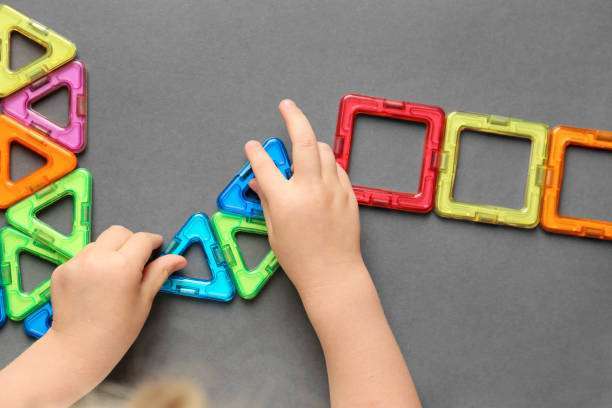
Magnetic tiles typically come in basic shapes such as triangles, squares, and pentagons—simple shapes that form the foundation of three-dimensional structures. On a two-dimensional plane, children can create various patterns and geometric shapes by combining these magnetic tiles. This process not only trains children’s observation skills but also helps them understand the sides, angles, and symmetry of shapes.
When assembling into three-dimensional space, the complexity of geometric logic increases significantly. Two-dimensional shapes must rely on the magnetic attraction between edges and corners to support the three-dimensional structure. In this process, children need to think: How can each face be stable? Which angles can withstand the weight above? This leap from two-dimensional to three-dimensional thinking is a crucial step in cultivating early spatial awareness and a vivid manifestation of early mathematical thinking.
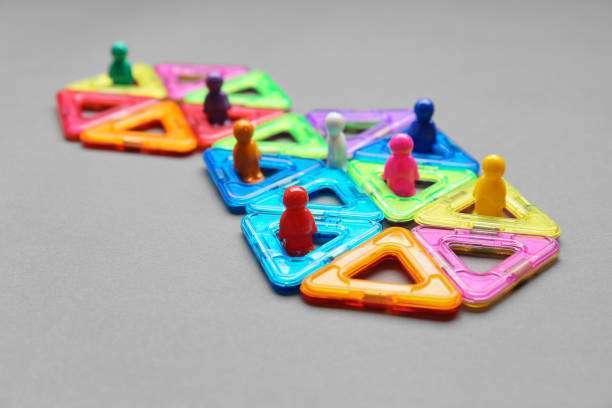
magnetic tiles lies in their utilization of the combinability of basic geometric shapes. For example, three equilateral triangles can form a pyramid, while combinations of squares and triangles can create more complex cubes or polyhedra. This infinite possibility of geometric combinations allows children to naturally understand the relationships between polygons and the stability of spatial structures through play.
II. Stable Support: An Intuitive Experience of Mechanical Principles
Assembling three-dimensional structures is not just a geometric problem but also involves the principles of support and balance in mechanics. Each edge of magnetic tiles is embedded with a magnetic strip, which can attract adjacent sheets within a certain angle. This magnetic connection provides initial stability, but a truly stable structure still requires proper support points and force distribution.
For example, when a child tries to build a tower, the base must be sturdy, with the triangular or square base providing support and distributing pressure. The lightweight design of the top prevents the tower from tilting or collapsing. Through continuous adjustments, children can intuitively understand the relationship between center of gravity, pressure, and stability. This sensory experience is more vivid and easier to understand than simply explaining mechanical formulas in the classroom.
Magnetic tiles also teach children the concept of “structural optimization.” During the building process, children discover that some combinations, while aesthetically pleasing, are not stable enough; adjusting angles or adding support pieces makes the entire structure more robust. This process not only cultivates children’s hands-on skills but also helps them understand the fundamental principles of force transmission and equilibrium in physics.
III. Building Strategies: From Random Combinations to Purposeful Construction
When children first encounter magnetic tiles, they often just randomly assemble them. As they gain experience, they gradually learn to plan and design. This “purposeful construction” means considering the stability and visual effect of the structure before starting to build.
A common strategy is to build the base first. A stable base not only supports the structure above but also serves as a reference point for the overall three-dimensional shape. The choice of base shape directly affects the height and form of the final artwork. Secondly, children learn layered construction: completing the bottom layer first, then gradually building upwards, ensuring each layer is tightly connected to the layer below. This layered construction method is similar to construction principles in architecture and also develops children’s logical thinking skills.
Furthermore, magnetic tile building involves the aesthetics of color and shape combinations. When designing their creations, children often consciously arrange tiles of different colors into regular patterns, which not only enhances the visual appeal of their work but also strengthens their understanding of patterns and symmetry. This balanced training between creativity and logic is the unique educational value of magnetic tiles .
IV. Parental Guidance: Enhancing the Dual Value of Play and Learning
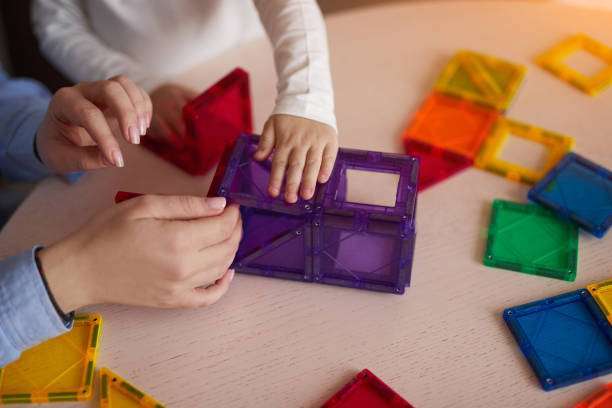
While playing with magnetic tiles is intuitive and fun, appropriate parental guidance can significantly enhance a child’s learning. Parents can pose small challenges after the child has built independently, such as, “Try building a stable bridge using triangles and squares,” or “Can you design a tall and stable tower?” Through these small tasks, children not only develop their fine motor skills but also cultivate problem-solving abilities.
At the same time, parents can guide their children to observe the stability of the structure, allowing them to discover for themselves which assembly methods are more stable and which are prone to collapse. This kind of “discovery learning” is more educational than simply giving the answer and is more likely to stimulate children’s interest in exploration.
From a safety perspective, magnetic tiles are usually rounded and encased in magnetic strips, but parents still need to pay attention to the risk of swallowing small pieces and provide children with ample space to build in order to prevent the creation from collapsing and causing accidents.
V. From Play to Skill Enhancement: The Comprehensive Value of Magnetic Tiles
Magnetic tiles are more than just toys; they serve both scientific education and art enlightenment. Through geometric logic training, children learn spatial thinking and shape recognition; through stable support practice, children experience mechanical principles and structural optimization; and through building strategies and color matching, children develop logical thinking and aesthetic abilities.
Through prolonged play, children not only gain a sense of accomplishment but also gradually develop patience, concentration, and problem-solving skills. This edutainment experience is unparalleled by traditional paper-based learning. More importantly, magnetic tiles allow children to naturally understand the combination of science and art through hands-on activities, fostering early development of comprehensive abilities.
VI. Conclusion
Magnetic tiles lie not only in their rich colors and shapes but also in the geometric logic and supporting principles behind them. The process of building from two-dimensional to three-dimensional allows children to understand the relationship between space, structure, and mechanics through play. Parental guidance can make this process more efficient and safe, while children’s exploration and creativity transform each magnetic tile into a tool for inspiring intelligence.
While playing with magnetic tiles , children are not only building beautiful three-dimensional works but also developing their spatial thinking, logical abilities, and creativity. Next time you see your child diligently assembling magnetic tiles , why not join them in exploring the geometric mysteries within, allowing science and art to quietly flourish through play?